

 Myopia management
 Dry Eye Treatment
 Shop Our Frames
Blog:How to Prepare for Your Eye Exam: A Step-by-Step Checklist
Summary
- Preparing for your eye exam leads to more accurate results, clearer diagnoses, and better follow-up care.
- Knowing the steps of the eye exam ahead of time helps you provide complete information and have a more productive visit.
- Texas State Optical At Briargrove delivers comprehensive eye care in Houston from start to finish.
Table of Contents
- Why Does Preparing for a Comprehensive Eye Exam in Houston Matter?
- What Medical and Vision History Should You Gather Before Your Eye Exam?
- What Should You Bring to Your Eye Exam?
- What is the Best Way to Prepare for an Eye Exam?
- What Happens During the Eye Test Procedure?
- What Should You Expect During the Eye Examination Procedure?
- What are the Best Tips for Accurate Eye Exam Results?
- What Should You Do After Your Eye Exam?
- Why Choose Texas State Optical At Briargrove for Your Eye Exam in Houston?
- Frequently Asked Questions
Why Does Preparing for a Comprehensive Eye Exam in Houston Matter?
Patients who come ready with the right information get more accurate results, clearer diagnoses, and better follow-up care than those who do not.
Your eye doctor in Houston can only work with what you provide. The more complete your information, the more effective your evaluation will be. Missing details about your medical history, current medications, or previous eye conditions can lead to easily avoidable gaps in your care.
Understanding the steps of an eye exam ahead of time means you spend less time trying to recall information on the spot and more time having a focused, productive conversation with your doctor.
What Medical and Vision History Should You Gather Before Your Eye Exam?
Before your appointment, compile all relevant medical and vision information. This includes:
- Your current eyeglass or contact lens prescription
- A list of all medications you are currently taking, including vitamins and supplements
- Any known allergies, especially to eye drops or anesthetic agents
- Personal or family history of eye conditions such as glaucoma, cataracts, macular degeneration, or retinal disease
- Systemic conditions like diabetes, hypertension, and autoimmune disorders
- Documentation of any previous eye surgeries or treatments
The more complete your history, the more effectively your eye doctor can assess your current condition.
What Should You Bring to Your Eye Exam?
Arriving with the right items saves time and helps your provider deliver a thorough evaluation. Here is what you should bring:
- Your current glasses, even if you feel your vision has changed
- Your contact lenses and their packaging or prescription details
- A valid photo ID and your insurance card
- A list of your current medications and dosages
- Any previous eye exam records or imaging, if available
- A list of symptoms or vision concerns you want to discuss
What is the Best Way to Prepare for an Eye Exam?
Get a full night of sleep, as fatigued eyes can affect how your pupils respond and how you perform on visual acuity tests.
On the day of your exam:
- Avoid wearing eye makeup, including mascara, eyeliner, and eyeshadow. Makeup particles can interfere with certain tests and may irritate if dilation drops are used.
- Skip eye drops unless your doctor has specifically instructed you to use them beforehand.
- Eat a regular meal before your visit. Some patients experience light sensitivity or mild dizziness after dilation, so having food in your stomach helps.
- Arrange for a ride home if you know your eyes will be dilated, as your vision may be blurred for several hours afterward.
What Happens During the Eye Test Procedure?
A standard comprehensive eye exam in Houston begins with a review of your health and vision history, followed by a visual acuity test using an eye chart to measure how clearly you see at various distances.
Next, your eye doctor will perform a refraction test to determine your precise prescription by having you compare lens options. Additional tests may assess:
- Eye muscle function
- Peripheral vision
- Depth perception
- Color vision
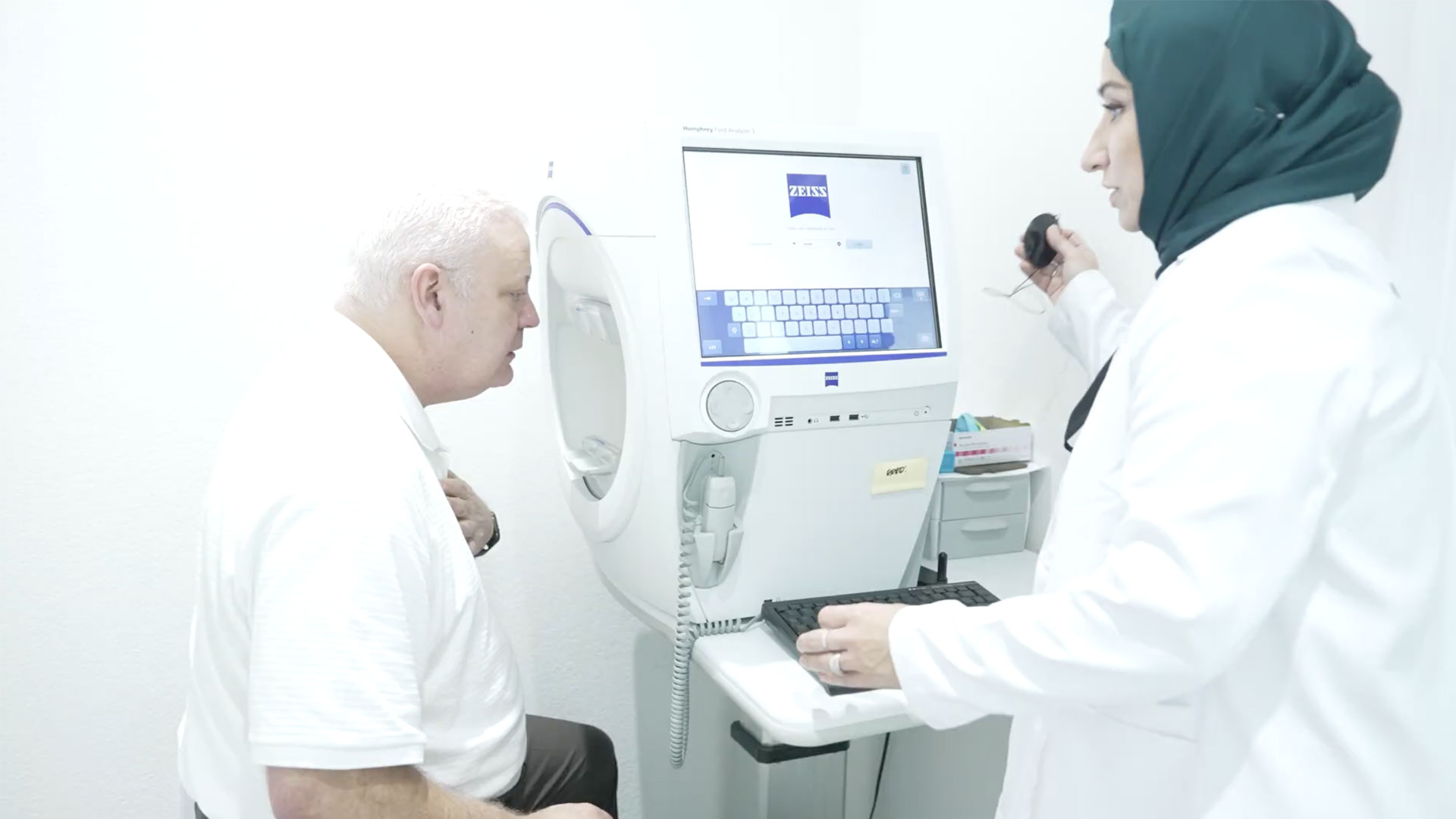
- Intraocular pressure, to screen for glaucoma
Depending on your age, health history, and symptoms, your doctor may recommend dilating your pupils to get a better view of the retina and optic nerve.
What Should You Expect During the Eye Examination Procedure?
Most patients complete a full exam in 45 to 90 minutes. A slit lamp biomicroscope is used to closely examine the front of the eye, including the cornea, lens, and iris.
If dilation is part of your exam, drops will be applied to widen your pupils, allowing the doctor to examine the retina, macula, and optic disc for signs of disease or damage. You may experience temporary blurred vision and light sensitivity after dilation, which can last two to four hours. Bringing sunglasses to your appointment can make this more comfortable.
We offer Optomap®. Optomap® is more than simply a picture, it provides an ultra-widefield view of the retina and can often be performed without dilating drops. It may serve as an alternative to or complement traditional dilation, depending on your doctor’s clinical evaluation, while providing a detailed view of the back of the eye to help detect and monitor changes in eye health.
What are the Best Tips for Accurate Eye Exam Results?
Good communication between you and your eye care provider is one of the most important factors in getting an accurate prescription and a thorough health evaluation. Here are some tips to keep in mind:
- Answer questions honestly, even if you are unsure. There are no wrong answers during a vision test.
- Do not guess during the visual acuity portion. If you genuinely cannot tell the difference between two options, say so.
- Inform your doctor of any recent changes in your vision, even if they seem minor.
- Mention any digital eye strain symptoms, such as headaches, dry eyes, or difficulty focusing after long screen sessions.
- Report eye pain, flashes of light, or floating spots immediately, as they may indicate a more urgent condition.
- Be consistent with your responses throughout the exam.
What Should You Do After Your Eye Exam?
Once your exam is complete, your eye doctor will review the findings and explain any recommended treatments, prescriptions, or follow-up care. If a new prescription is issued, ask questions about lens options, coatings, or contact lens types that may suit your lifestyle.
If your eyes were dilated:
- Plan for reduced vision clarity for the next few hours
- Drive with distance correction, though vision may remain slightly blurred until dilation wears off.
- Use sunglasses when stepping outside to manage light sensitivity
Follow up promptly if your doctor identified any conditions that require monitoring or treatment. Early intervention is often the key to preserving long-term vision. If additional testing, such as visual field analysis or optical coherence tomography, is recommended, schedule those appointments as soon as possible.
Why Choose Texas State Optical At Briargrove for Your Eye Exam in Houston?
Texas State Optical At Briargrove is a doctor-owned and operated practice with a deep legacy of trust in the Houston community. Their team delivers comprehensive medical eye care that goes well beyond a standard vision screening, addressing the full spectrum of your eye health with precision and genuine care.
Whether you need a new prescription, a medical eye evaluation, or stylish eyewear fitted with expert precision, Texas State Optical At Briargrove is equipped to meet your needs from start to finish.
Experience the difference that doctor-led, patient-centered care truly makes. Book your comprehensive eye exam in Houston with Texas State Optical At Briargrove today.
Frequently Asked Questions
How To Pass An Eye Exam Without Glasses?
You cannot technically pass or fail an eye exam. Focus on answering honestly and consistently. The goal is to get an accurate picture of your vision so your doctor can prescribe the right correction.
Should I Bring My Current Glasses to the Eye Exam Evaluation?
Yes, and you should. Bringing your current glasses helps your doctor assess whether your existing prescription is still accurate or needs to be updated.
When To Get An Eye Exam?
Adults should have an eye exam every year. This includes those with diabetes, a family history of eye disease, or existing vision conditions may need annual exams.
Can I Wear Eye Makeup To An Eye Exam?
It is best to skip eye makeup on exam day. Particles from mascara or eyeliner can interfere with certain tests and may affect the procedure.
Should I Wear Contacts To An Eye Exam?
You do not need to remove your contact lenses before your exam. However, let your doctor know you are wearing them, as this may be relevant to certain tests performed during your visit. Please also bring or know the brand and prescription of the contact lenses you are currently wearing.
How To Pass An Eye Exam With Bad Eyes?
There is no passing or failing. Simply be honest about what you see. Your doctor uses your responses to determine the best prescription and identify any underlying conditions.
Can I Use Eye Drops Before an Eye Exam?
Avoid eye drops before your exam unless your doctor instructs otherwise. Some drops can affect pupil response and alter test results.
Is It Better To Get An Eye Exam In The Morning Or Afternoon?
Morning appointments are often recommended because your eyes are more rested and less fatigued from screen use, resulting in more consistent test results.
What Does an Eye Exam Consist Of?
A comprehensive eye exam evaluates both your vision and overall eye health. It typically includes visual acuity testing, refraction to determine your eyewear prescription, eye alignment and movement checks, intraocular pressure measurement for glaucoma, and an examination of the internal and external structures of your eyes.
Our comprehensive eye exams also include Neurolens® Advanced Eye Alignment Testing, which measures how your eyes work together at different distances to identify subtle alignment issues that may contribute to eye strain, headaches, and visual discomfort.
Can I Wear Mascara To An Eye Exam?
It is best to avoid mascara on exam day. Particles can flake into the eye during testing and may interfere with equipment used during the examination.
Quick Links
Helpful Articles
article_category: products
article_category: psychiatry
article_category: faqs
article_category: cats
article_category: general
article_category: services
article_category: technology
article_category: dogs
article_category: restorative
article_category: vision therapy
article_category: contact lenses
article_category: health
article_category: conditions
article_category: eye surgery co-management
article_category: exotic
article_category: cosmetic
article_category: surgical procedures
article_category: aesthetics
article_category: preventative
article_category: ocular disease management
article_category: eyeglasses
article_category: eye health
article_category: large animal
[]
article_category: psychiatry
article_category: faqs
article_category: cats
article_category: general
article_category: services
article_category: technology
article_category: dogs
article_category: restorative
article_category: vision therapy
article_category: contact lenses
article_category: health
article_category: conditions
article_category: eye surgery co-management
article_category: exotic
article_category: cosmetic
article_category: surgical procedures
article_category: aesthetics
article_category: preventative
article_category: ocular disease management
article_category: eyeglasses
article_category: eye health
article_category: large animal
[]
Flowbite is an open-source library of interactive components built on top of Tailwind CSS including buttons, dropdowns, modals, navbars, and more.
Check out this guide to learn how to get started and start developing websites even faster with components on top of Tailwind CSS.

All Eyecare Services
We offer a wide variety of eye care services to the Houston community. Contact us with any questions about our services.

Locate Us
Click here to find us on Google Maps and take the first step toward meeting our team in person—we can't wait to welcome you to our office!

Contact Information
Office Hours
- Monday 9:00am - 6:00pm
- Tuesday 9:00am - 6:00pm
- Wednesday Closed
- Thursday 9:00am - 6:00pm
- Friday 9:00am - 6:00pm
- Saturday 9:00am - 1:00pm
- Sunday Closed
- Monday 9:00am - 6:00pm
- Tuesday 9:00am - 6:00pm
- Wednesday Closed
- Thursday 9:00am - 6:00pm
- Friday 9:00am - 6:00pm
- Saturday
- Sunday Closed
- Monday 8:00am - 5:00pm
- Tuesday
- Wednesday
- Thursday
- Friday
- Saturday
- Sunday
© 2026 Texas State Optical Briargrove. All rights Reserved - Accessibility Statement - Privacy Policy - Sitemap
Managed and Designed by 