

 Myopia management
 Dry Eye Treatment
 Shop Our Frames
Why Private Practice Eye Exams Cost More Than Big Box Stores
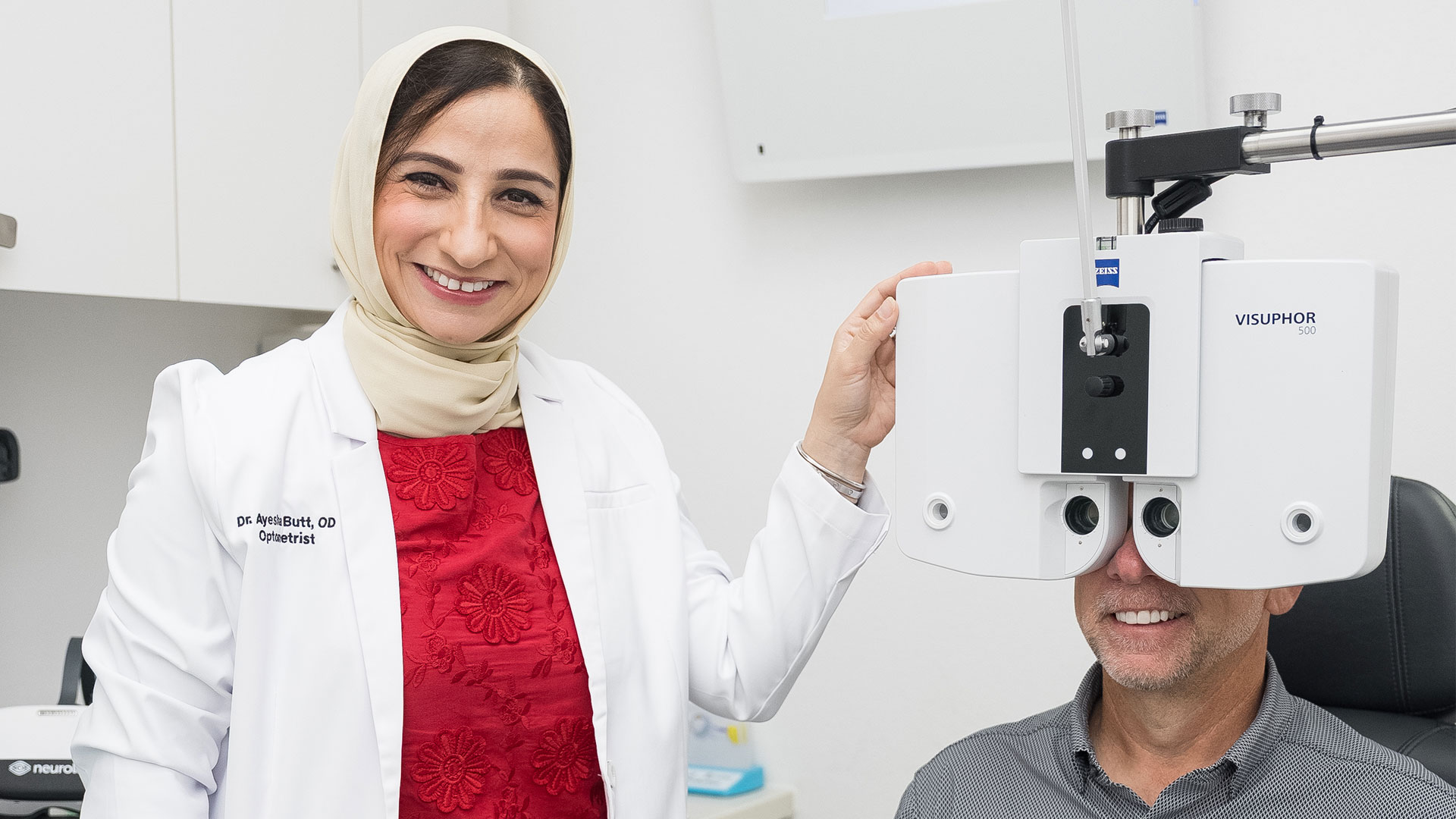
Private practice eye exams typically run $50 to $200 or more without insurance, compared to roughly $50 to $90 at big box stores. The difference usually comes down to time, technology, and how each business operates.
Private practices often use more advanced diagnostic equipment and look for eye diseases, not just changes to your prescription. Big box stores and private practices both sell glasses, contacts and eye care products, so the real difference is the exam. Many retail stores offer a quick prescription check. A private practice spends more time with each patient to evaluate the full health of your eyes, including other causes of blurry vision like dry eye, cataracts, glaucoma and diabetic eye disease.
Maybe you’ve stood in line at Costco, spotted a $59 or $79 eye exam sign, then called a private practice nearby and heard $150 or more for what seems like the same exam. That price difference can feel pretty confusing. It doesn’t necessarily mean either side is doing anything wrong. Once you understand what you’re actually paying for, it’s easier to decide what makes sense for you.
Below, we’ll look at what drives the price difference, what you get for the extra money, and when paying more may be worth it.
What a Private Practice Eye Exam Actually Costs
A comprehensive eye exam at an independent practice generally costs between $50 and $200 without vision insurance, and the national average sits around $136. At Texas State Optical At Briargrove, a comprehensive exam without insurance runs $149, which lines up closely with that national figure. With a vision insurance company, most patients pay somewhere between $10 and $40, and the national average with vision coverage drops to about $25.
That price covers a lot more than a quick "which is clearer, one or two" check. A standard comprehensive exam takes around 30 minutes, and first-time visits or exams that include specialized testing can run 60 minutes or longer. During that time, the doctor checks visual acuity, refraction, eye muscle movement, pupil response, visual field, and does a slit-lamp and retinal exam. If something looks off, that same visit can shift into a medical eye exam billed to health insurance instead of vision insurance, covering conditions like glaucoma, diabetic retinopathy, or macular degeneration.
Contact lens fittings are billed in addition to the base exam fee at any practice, private or retail. Retinal imaging varies more than people expect. At Texas State Optical At Briargrove, this means ultra-widefield retinal imaging with optomap, which photographs a wide view of the retina in seconds. An OCT scan is a different, more targeted test. It’s typically medical rather than routine, reserved for patients with a specific diagnosis or a family history of eye and health problems, unless it’s bundled with the optomap image as part of a wellness exam. Dilation works the other way around: it’s already included in a comprehensive eye exam here at no extra charge. If a patient needs to come back for dilation on a separate visit, that becomes an additional medical visit.
Why Big Box Stores Can Offer Cheaper Eye Exams
Warehouse clubs and optical chains aren’t cutting corners out of nowhere. Their whole business model is built around a different math. The eye exam is priced to get you in the door, and the revenue comes from everything else in the store, from groceries to TVs and computers. Private practices also sell frames, lenses and contact lenses, but the focus is full-service care for the health of your eyes and how it connects to your overall health.
A few things make that low sticker price possible. The optometrist working inside or next to a Costco or Walmart is usually an independent doctor leasing that space, not a store employee, and that arrangement keeps their overhead tied to volume rather than to the kind of diagnostic equipment a full medical practice invests in. Appointments also tend to move because the focus is getting the patients through the door, not a 45-minute deep dive into your retinal health. And because these locations see a high volume of patients booking a routine refraction, they can spread costs across far more visits per day than a smaller independent office ever would.
What the Extra Cost Buys You at a Private Practice
Time is the biggest difference, and it's not subtle. A rushed 15-minute exam can catch an obvious prescription change. It's much less likely to catch the early, symptomless signs of glaucoma or a small area of diabetic damage on the retina. Doctors at independent practices generally take the time to look for those things, because that's the core part of the visit, not just an extra step.
Technology is the second piece. Many private practices, including Texas State Optical At Briargrove, use Optomap for ultra-widefield retinal imaging, Optical Coherence Tomography (OCT) when a patient's history or diagnosis calls for it, corneal topography, tonometry for glaucoma screening, and gonioscopy to check drainage angles. That's the same category of equipment an ophthalmologist's office relies on, and it's what turns a routine exam into a real disease-screening tool rather than just a vision check.
Continuity matters too. When you see the same doctor year after year, they get to know your eyes, not just your chart. A change that looks minor in isolation can look very different once a doctor who's tracked your eyes for three years compares it against your history. That kind of pattern recognition is hard to replicate in a walk-in, volume-driven setting where you might see a different doctor every visit.
Private Eye Care vs. Big Box Stores: A Side-by-Side Look
| Factor | Private Practice (e.g., Texas State Optical At Briargrove) | Big Box Store |
|---|---|---|
| Typical exam cost (no insurance) | $50–$200, often $130–$150 | $50–$90 |
| Average appointment length | 30–60+ minutes | 15–20 minutes |
| Same doctor each visit | Usually yes | Often varies |
| Advanced imaging (Optomap retinal imaging, OCT when medically indicated) | Common | Less common, often an upsell |
| Medical eye exam / disease management | Yes, coordinated with health insurance | Limited, may require referral out |
| Business incentive | The exam, long-term eye health, and in-house lens finishing, adjustments and repairs for Texas State Optical purchases | Frame and lens sales |
| Best fit for | Anyone with a family history of eye disease, diabetes, chronic conditions, or kids needing myopia management | Healthy adults needing a routine glasses update |
The Right Choice Depends on What Your Eyes Actually Need
If you're a healthy adult with no eye disease history and you just need a prescription refresh, a big box store exam can genuinely be enough. But if you have diabetes, a family history of glaucoma or macular degeneration, a child whose myopia needs monitoring, or you simply haven't had a thorough look at your retinal health in a while, the extra cost of a private practice exam is usually buying real, measurable value rather than convenience.
“An eye exam should be more than checking letters on the chart,” says Dr. Butt of Texas State Optical Briargrove. “We want to make sure we’re looking at the overall health of your eyes and catching potential problems as early as possible.”
At Texas State Optical At Briargrove, exams are built around the same standard: enough time and enough equipment to catch problems before they become emergencies, not just to write a new prescription. If it's been more than a year since your last comprehensive exam, or you've never had an Optomap retinal screening or glaucoma testing done, call (713) 785-2022 or schedule an appointment online to get on the calendar.
Frequently Asked Questions
Is A Private Practice Eye Exam Worth The Extra Cost?
Yes, especially if you have diabetes, a family history of eye disease, or haven’t had a comprehensive exam with imaging in over a year. The extra cost typically buys more exam time, more advanced diagnostic equipment, and a doctor who tracks your eye health over multiple years instead of a single visit.
Why Are Eye Exams Cheaper At Costco And Walmart?
Big box stores price the exam itself close to cost because their revenue comes from the rest of the store, like groceries and other retail items. The doctors are usually independent contractors leasing space rather than practice owners, and appointments move faster to support higher patient volume. Private practices sell glasses and contacts too, but they specialize in them, from choosing the right lenses and coatings to frame styling and taking accurate measurements fitted to each patient.
What Does A Private Practice Eye Exam Include That A Big Box Store Exam Might Not?
Private practices more often include ultra-widefield retinal imaging with optomap, corneal topography, glaucoma testing (tonometry and gonioscopy), and dilation at no extra charge as part of a comprehensive exam. An OCT scan is usually a separate, medically indicated test rather than a routine part of every visit. Specialty care like dry eye treatment, eye misalignment care and myopia management usually isn’t available at big box stores, but it’s a core part of what a private practice like Texas State Optical At Briargrove offers.
Can I Use My Vision Insurance At A Private Optometry Practice Instead Of A Big Box Store?
In most cases, yes. Independent practices like Texas State Optical At Briargrove accept the same vision insurance plans that big box optical departments do, and copays are typically similar, often in the $10 to $40 range. For patients without vision insurance, Texas State Optical also offers its own TSO Vision Plan. It has no monthly premiums or cost to join and provides savings on routine eye exams, glasses and contacts, similar to a traditional vision plan.
Do Big Box Stores And Private Practices Use The Same Equipment For Eye Exams?
Not always. Both typically have the basics for a standard refraction and vision check. Private practices are more likely to also have advanced imaging equipment like Optomap for ultra-widefield retinal imaging and OCT scanners for patients who need a closer look at a specific condition, tools that catch early signs of disease a basic refraction alone would miss.
How Much Does An Eye Exam Cost Without Insurance?
Nationally, a comprehensive eye exam without insurance averages around $136, with a typical range of $50 to $200 depending on the provider and what’s included. At Texas State Optical At Briargrove, a comprehensive exam without insurance is $149. Patients without vision insurance can also join the TSO Vision Plan, a free membership with no monthly premiums that takes 30% off comprehensive exams and most eyewear and lenses.
Should I Go To A Private Practice For A Medical Eye Exam, Like For Diabetes Or Glaucoma?
Yes. Medical eye exams for conditions like diabetic retinopathy, glaucoma, or macular degeneration are billed through health insurance and generally require the kind of specialized diagnostic equipment and follow-up coordination that private practices are set up to provide. If you're on an HMO medical plan, you'll need a referral from your primary care physician once a year before seeing a Texas State Optical At Briargrove doctor for this kind of testing.
Quick Links
Helpful Articles
article_category: vision therapy
article_category: contact lenses
article_category: eye surgery co-management
article_category: products
article_category: services
article_category: technology
article_category: surgical procedures
article_category: ocular disease management
article_category: eyeglasses
article_category: eye health
[]
Flowbite is an open-source library of interactive components built on top of Tailwind CSS including buttons, dropdowns, modals, navbars, and more.
Check out this guide to learn how to get started and start developing websites even faster with components on top of Tailwind CSS.

All Eyecare Services
We offer a wide variety of eye care services to the Houston community. Contact us with any questions about our services.

Locate Us
Click here to find us on Google Maps and take the first step toward meeting our team in person—we can't wait to welcome you to our office!

Contact Information
Office Hours
- Monday 9:00am - 6:00pm
- Tuesday 9:00am - 6:00pm
- Wednesday Closed
- Thursday 9:00am - 6:00pm
- Friday 9:00am - 6:00pm
- Saturday 9:00am - 1:00pm
- Sunday Closed
© 2026 Texas State Optical Briargrove. All rights Reserved - Accessibility Statement - Privacy Policy - Sitemap
Managed and Designed by 